
- The EU wants every household to be able to cope alone for at least 72 hours if power, water, phones or shops fail.
- On 3 November 2026 the European Commission published its population preparedness guidelines: they are not mandatory and set no quantities.
- The basics: water, food, medicines, a way to stay informed and some cash. Plus two skills: cooking without electricity and first aid.
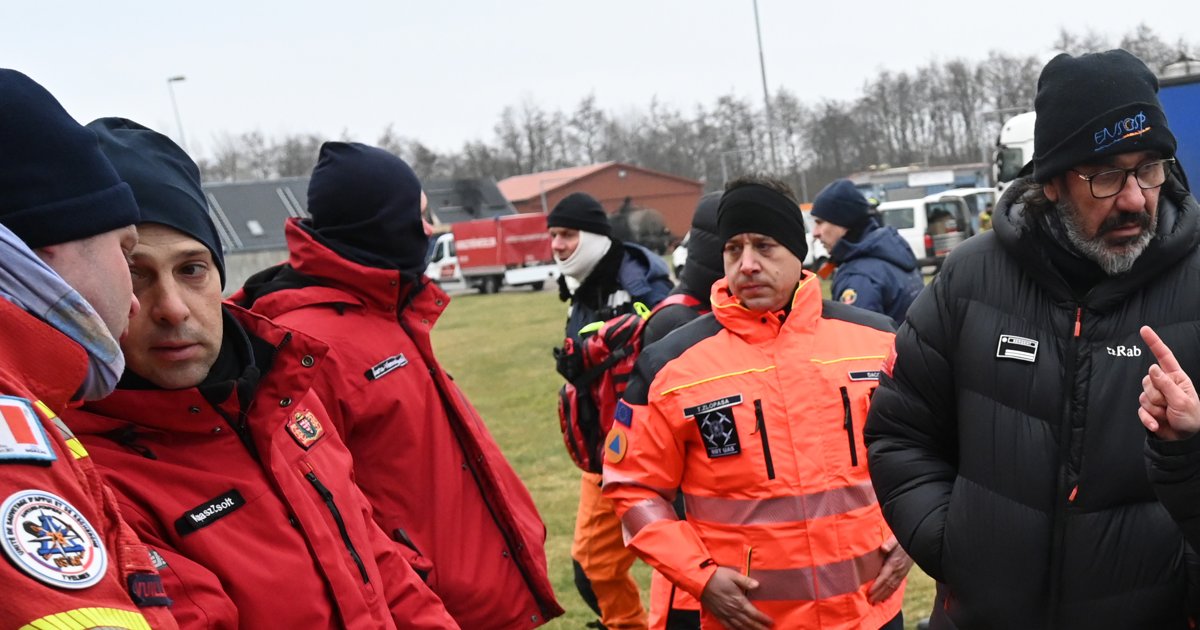
Since March 2025 Brussels has been repeating the same idea: in a major emergency, rescue services take time to reach everyone, and the first hours depend on what you have at home. Now it has put it in writing, with guidelines for governments and advice for families. Here’s what it says and how to apply it in a flat in Spain.
What the European Commission has published
- March 2025: the Preparedness Union Strategy. A plan of 30 actions so the EU is better prepared for disasters, pandemics, cyberattacks or conflicts. One of its goals: that the population can be self-sufficient for at least 72 hours.
- 3 November 2026: the population preparedness guidelines. Presented by the Commissioner for Preparedness and Crisis Management, Hadja Lahbib, at the European Civil Protection Forum. There are four:
- Household self-sufficiency for at least 72 hours.
- How authorities should communicate risks.
- Preparedness in early childhood and primary education.
- Preparedness that includes people with disabilities.
- European Preparedness Day: the Commission proposes holding it every 23 October from 2027.
Important: these are recommendations, not obligations. Each country decides how to apply them, and Protección Civil remains the reference in Spain.
What the EU asks of every household
The guidelines don’t give a fixed list or exact quantities. They talk about covering basic needs and having skills, starting little by little and at an affordable cost:
Water
For drinking, cooking and basic hygiene.
Food
Keeps without a fridge and can be eaten with little or no cooking.
Medicines
What each person at home takes, plus a first-aid kit.
Communication
A way to stay informed without internet: a battery radio.
Cash
No power means no card machines or ATMs.
Skills
Cooking without electricity and first aid.
Plan
A family plan and a grab bag in case you have to leave.
Why 72 hours?
It’s the time emergency services usually need to reach everyone in a major crisis. During those three days, every household that manages on its own frees up rescue teams for those who need them most. The Commission frames it as a minimum, not a target: if you can last longer, even better.
We saw it in Spain on 28 April 2025: 16 hours without power across the whole peninsula, with no mobile or internet, and metro and trains at a standstill. Those with a battery radio, water and food at home got through it calmly.

How to apply it in a flat in Spain
The EU doesn’t give quantities. We do, using standard civil protection criteria and thinking of a flat with no storage room:
- Water: 3 litres per person per day just for drinking and cooking. For 4 people and 3 days, 36 litres. 5–8 litre bottles are easy to carry up the stairs. See bottled water on Amazon.
- Food: tinned food you already eat (tuna, pulses, fruit in syrup), crispbread, nuts. And a manual tin opener. It’s all calculated in Food and water, with 72-hour and one-month kits.
- Medicines: a week’s supply of what each person takes, plus a basic first-aid kit.
- Communication: a battery or hand-crank radio and a charged power bank. We compare models in best emergency radios.
- Cash: around €100–200 in small notes, kept with the kit.
- Cooking without power: a camping gas stove with 2 cartridges, always with the window open.
- Family plan: meeting point, who picks up the children and phone numbers written on paper. There’s a template in Family plan.
If you live with older people, babies or people with disabilities
One of the four European guidelines is about inclusive preparedness. Its advice for families: make a personal plan for each person with special needs (medication, equipment that needs electricity, mobility), have trusted contacts who know what to do, and review it from time to time. We go into detail in Kits by profile.
Children too
Brussels wants preparedness to enter schools from nursery level, built into normal lessons and without scaring anyone. You can do the same at home: make sure children know where the torch is, how to switch on the radio and where the meeting point is. Turning it into a game works better than a lecture.
Your first step, today
- Print the 72-hour kit checklist (in Spanish) and tick what you already have.
- Buy what’s missing little by little, as the EU itself recommends.
- Put 23 October in your calendar: the future European Preparedness Day is a good date to check your kit.
And if you want to go beyond 72 hours, there’s our 30-day protocol.
- European Commission, “Guidelines on Population Preparedness under the EU Preparedness Union Strategy”, C(2026) 8250 final, 30-10-2026.
- European Commission, Preparedness Union Strategy, March 2025.
- Directorate-General for European Civil Protection and Humanitarian Aid Operations (DG ECHO): civil-protection-humanitarian-aid.ec.europa.eu.
- Images: © European Union. Reuse authorised provided the source is acknowledged (Decision 2011/833/EU).